
First impressions matter—and in a home, they often start at the entry.
For some, that means a formal foyer: the styled front-door moment that welcomes guests with intention. For others, it’s a family-focused entryway—a hardworking drop zone where muddy boots, backpacks, and grocery bags make their first stop. And in many homes, one space does it all.
No matter what kind of entry you have, it deserves to be both beautiful and functional. At Nandina, we believe that real life and real style can—and should—coexist. So when it comes to how to decorate an entryway, it’s not about perfection. It’s about designing with purpose, honoring your lifestyle, and creating a space that works as hard as it looks good doing it.
Understanding the Two Types of Entryways
The Foyer
Traditionally, the foyer is your home’s “front door moment”—a more formal space where guests are welcomed. Here, the design might lean decorative and sculptural, offering a refined introduction to your home’s style.


The Drop Zone / Everyday Entry
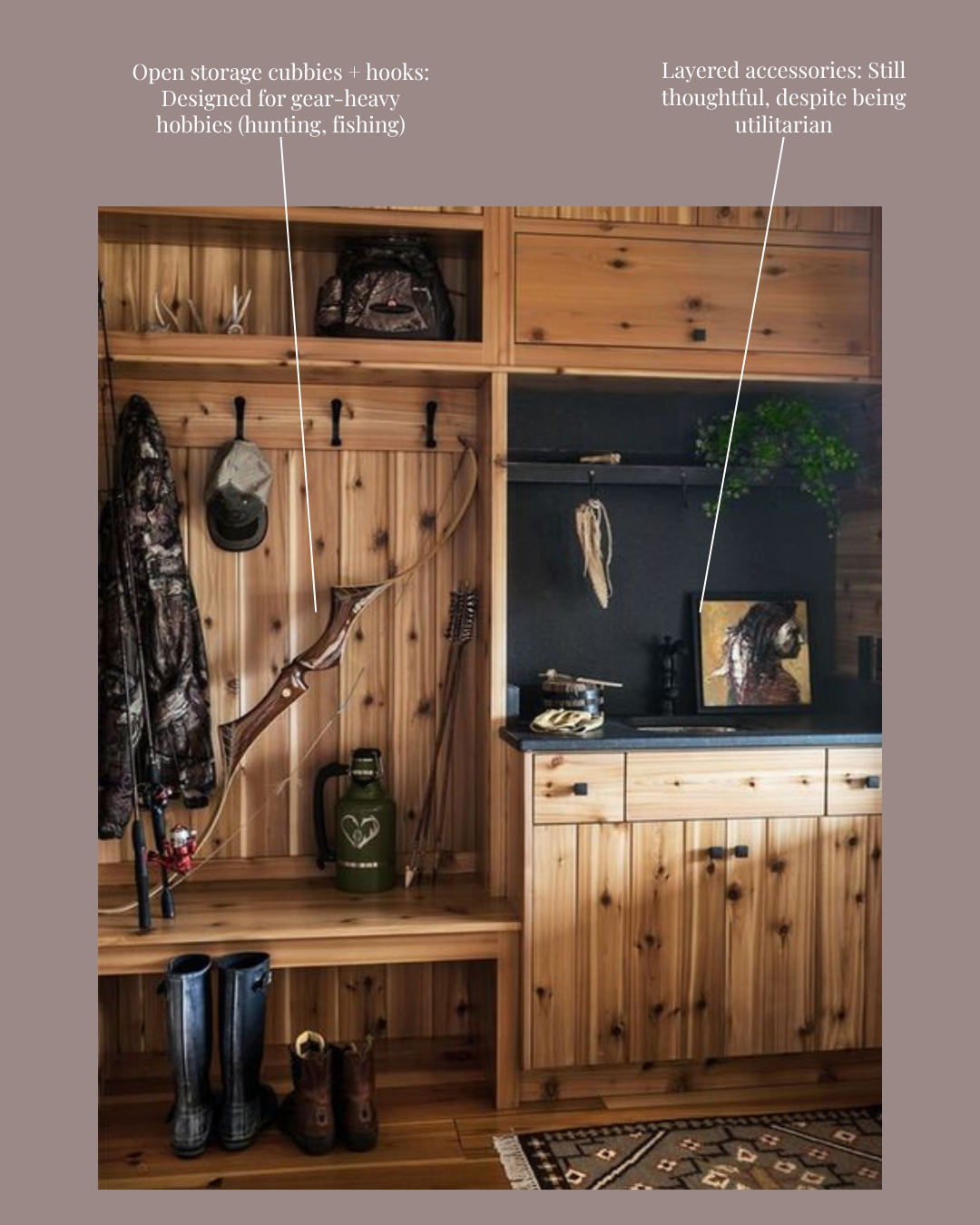
Often located near the garage or back door, this is where real life happens. Shoes come off, bags get dropped, and routines begin and end. But just because it’s utilitarian doesn’t mean it can’t be beautiful. We believe in designing for the people who live in the home, not just the ones who visit.
Kid-friendly and family-focused, this built-in drop zone offers storage for everyone. Baskets and bins keep clutter tucked away while a runner adds softness and pattern.

Foundational Pieces That Work in Any Entry
Whether you’re designing a polished foyer or a practical family entry, certain elements help anchor the space:
- A console table or built-in cabinet offers structure and a surface to style.
- Benches or stools make transitions more comfortable (especially with little ones or muddy boots).
- Hooks, baskets, or drawers offer solutions for daily essentials, from keys and leashes to hats and bags.
When chosen with intention, these pieces serve both style and function, bringing rhythm to a space that might otherwise feel like a pass-through.
A thoughtful mix of closed cabinetry, cushion seating, and hook storage makes this transitional area equal parts beautiful and useful.
Note the tile inlay: a subtle but powerful detail. It defines the drop zone and protects flooring from muddy boots and everyday mess.

Anchor the Space with a Statement Piece
Once the essentials are in place, shift your focus to something bold—something that makes your entryway memorable.
That might be a large-scale piece of art, a dramatic mirror, or a standout light fixture that immediately catches the eye. The goal isn’t to overwhelm the space, but to offer a clear focal point that speaks to your home’s style. And remember: your entryway doesn’t have to match the rest of your home, but it should hint at what’s to come.
How to Style Different Types of Entryways
Not all entryways are created equal, and that’s where intentional design shines. Whether you’re working with a narrow pass-through or a spacious mudroom, there are smart, stylish ways to make the most of your layout.
Small or Narrow Entryways
When square footage is limited, vertical space is your best friend. Consider wall-mounted hooks, floating shelves, or tall, narrow mirrors to draw the eye upward and save floor space. Keep your styling minimal and curated—a simple bowl for keys, a slim tray for mail, or one small lamp can do the trick. In these compact areas, less is truly more.
Spacious Entryways or Mudrooms
With more room comes more opportunity for layering. Larger entryways can handle seating, built-in storage, oversized rugs, and layered lighting. A mudroom, for example, might include closed cabinetry, a durable indoor-outdoor rug, and wall sconces that bring both form and function. Don’t shy away from introducing softness here. Drapes, pillows, and plants add warmth to what could otherwise feel purely functional.
Styling Details That Make an Impact
Sometimes, it’s the smallest design choices that make the biggest difference. Once the main furniture is in place, styling becomes the layer that makes the space feel finished and personal.
Lighting
Lighting sets the mood the moment you walk through the door. In an entryway, layered lighting adds both ambience and function. Use table lamps, wall sconces, or an overhead fixture to softly illuminate the space while adding sculptural interest.
Accessories
Styling your entry doesn’t require a full redesign. Baskets, vases, books, and trays allow for quick and easy refreshes. These items not only bring personality but also offer functional use, especially in drop zones. We love to rotate accessories seasonally—fresh greenery in spring, branches in fall—to keep things feeling intentional and in rhythm with the rest of the home.
Greenery and Florals
Never underestimate the power of bringing life to a space. Whether it’s a single stem in a bud vase or a lush potted plant in the corner, greenery brings softness and freshness to a design. For lower-light entryways, faux plants can offer the same effect without the maintenance, as long as the quality is high.
Rugs and Runners
Rugs help define and soften an entry. A runner in a narrow hallway elongates the space, while a natural fiber rug near the front door provides texture and durability. Be sure to consider the scale and material, something that stands up to foot traffic but still feels welcoming underfoot.
Need help choosing the right pieces? Nandina’s designers can help you create a welcoming and functional entry that reflects your lifestyle. Whether you’re in Greenville, SC; Atlanta, GA; or Aiken, SC – contact us today.
Final Touches—and Mistakes to Avoid
Personal elements make your entryway feel like your home. Framed photos, candles, or a meaningful object from your travels can offer that finishing touch that brings the whole space together.
But even beautiful design can go sideways without a few guardrails. Common pitfalls include:
- Overcrowding the space with too many objects or oversized furniture
- Choosing pieces that are the wrong scale for the room
- Ignoring lighting, which can leave even a stylish entry feeling cold
- Forgetting about function, especially if the space is heavily used
At Nandina, we believe every room should work hard and feel special, and the entry is no exception.
Ready to Reimagine Your Entryway?
A well-designed entry isn’t just about style. It’s about how it welcomes you in and supports your everyday. With the right balance of function and beauty, your entryway can set the tone for your entire home.
Whether you’re starting from scratch or simply need a refresh, our team is here to help.
Contact Nandina Home & Design to bring your vision to life.